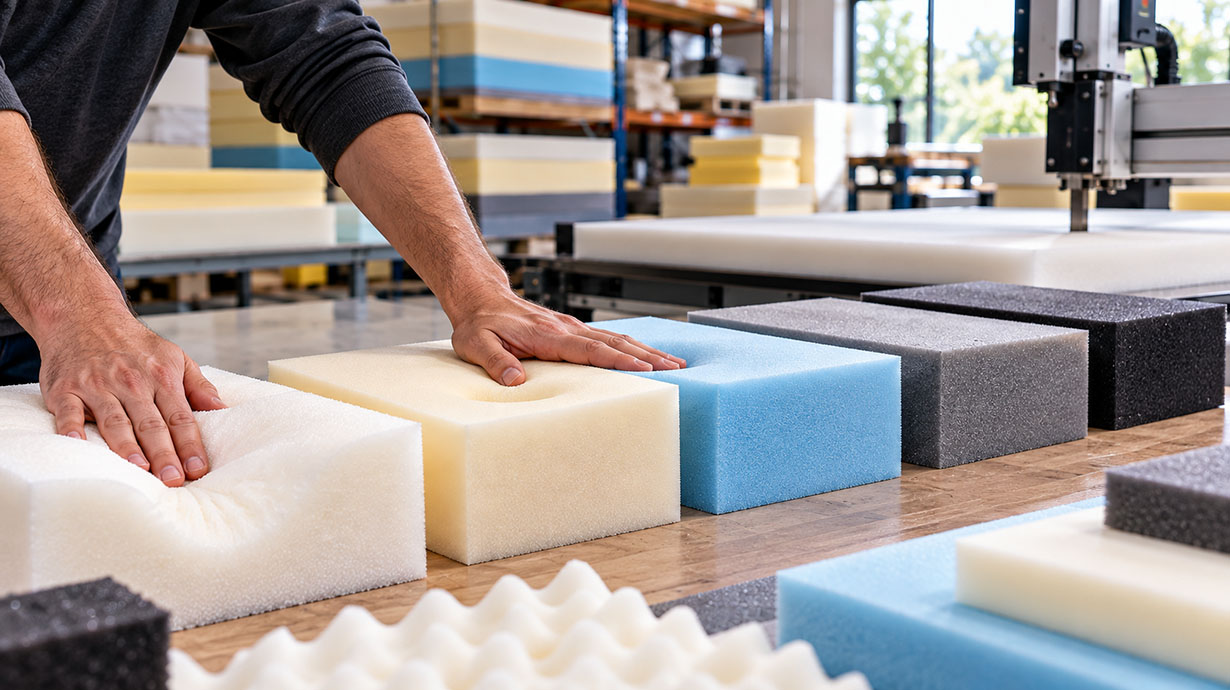
Choosing the right foam firmness can make a noticeable difference in comfort, support, durability, and overall performance. Whether you are ordering foam for furniture, seating, packaging, equipment, or another commercial application, the best choice is not always simply “soft” or “firm.” It depends on how the foam will be used and what you expect it to do over time.
At D.E.M.P., businesses can choose from a wide range of polyurethane foam options, including super soft, soft, medium, medium-firm, firm, and super-firm grades. This variety makes it easier to match the foam to the specific demands of a project rather than settling for a one-size-fits-all solution.
Soft foam is generally a good option when comfort and flexibility are the main priorities. It compresses more easily and can provide a softer feel in applications where cushioning is important. D.E.M.P. H26 Conventional Foam and HR26 Qualux Deluxe are examples of soft foam options, while HR16 Qualux Deluxe provides an even softer, more responsive feel.
Medium firmness is often selected when a balance of comfort and support is required. D.E.M.P. L32 Starter Foam, H35 Conventional Foam, and HR32 Qualux Deluxe all fall into this category. Medium foam can be a practical choice for many everyday commercial uses because it provides support without feeling excessively rigid.
For applications that require more structure, medium-firm and firm foam may be more appropriate. D.E.M.P. H45 Conventional Foam and HR41 Qualux Deluxe provide medium-firm options, while H65 Conventional Foam and HD60 Reflex Premium offer a firmer level of support. These grades may be suitable where the foam needs to resist compression more effectively or maintain its shape under regular use.
D.E.M.P. H95-N Conventional Foam is rated super firm and is designed for situations where a much higher level of firmness is required. However, the firmest foam is not automatically the best foam. Selecting a product that is too firm for the intended application can be just as problematic as choosing one that is too soft.
When choosing foam, it is also important to understand that firmness and foam quality are not the same thing. A softer foam can still be a premium product, while a very firm foam does not necessarily mean it will be the right choice for every application. Factors such as density, resilience, expected usage, dimensions, and durability should all be considered alongside firmness.
For businesses looking for a foam supplier in Denver or Colorado, working with an experienced wholesale foam supplier can make the selection process easier. D.E.M.P. has served businesses since 1990 and provides American-made polyurethane foam, custom foam cutting, and multiple firmness options for commercial needs.
If you are unsure which foam grade is right for your project, requesting a sample can also be helpful. Comparing different foam options before placing a larger order gives you a better understanding of how each firmness level feels and performs.
The right foam should match your project, not force your project to adapt to the foam. By considering the intended use, required support, comfort level, durability, and dimensions, you can make a more informed choice and get better long-term results from your custom cut foam.